Anxiety is the brain’s way of saying:
“Something is uncertain, unpredictable, or potentially dangerous.”
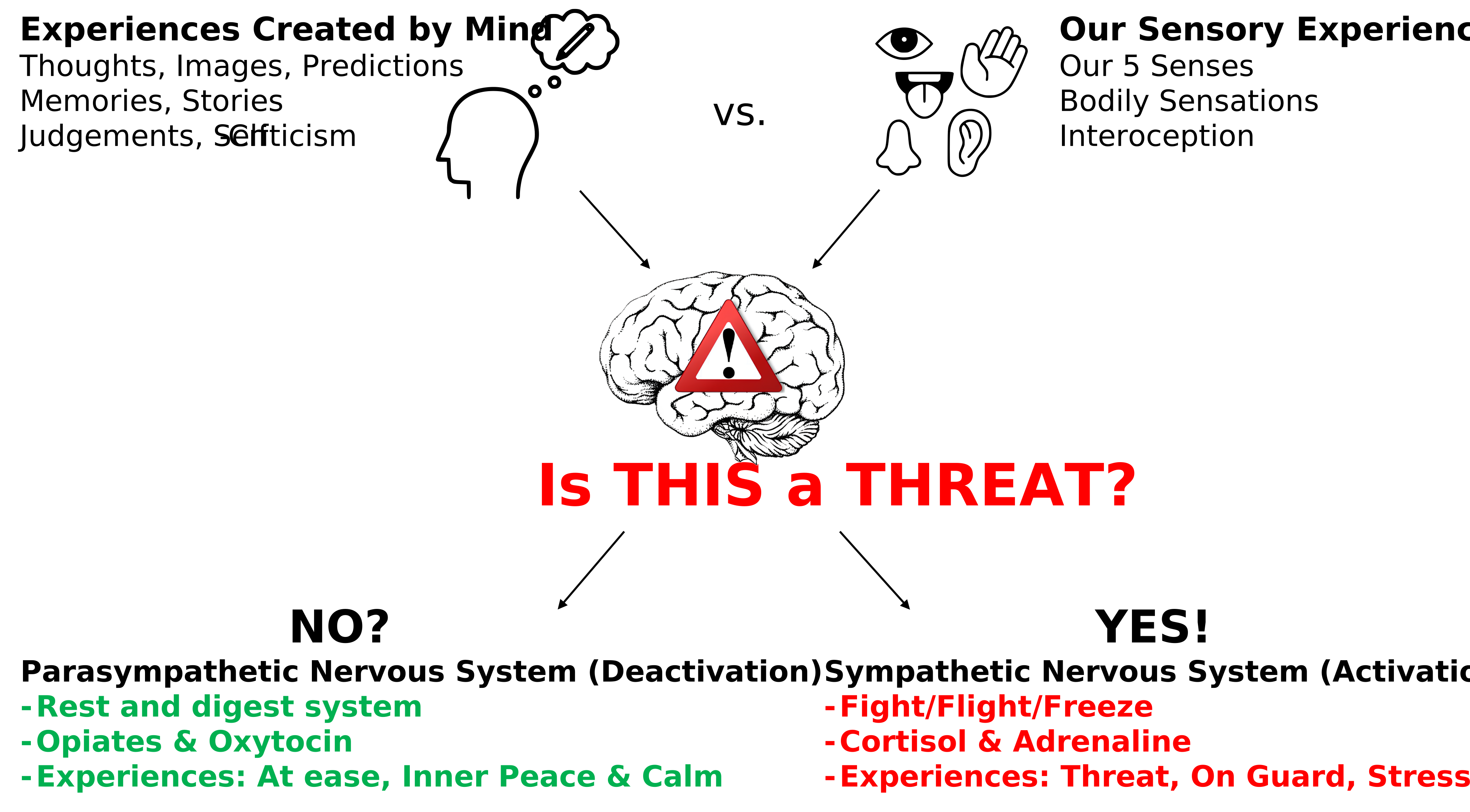
Importantly, the brain does not distinguish well between:
-
External danger (injury, illness, instability), and
-
Internal danger (bodily sensations, dizziness, fatigue, palpitations, brain fog)
To the nervous system, anxiety itself becomes evidence of threat.
How Anxiety Triggers the Protective Cascade

1. Anxiety Activates the Brainstem First
Anxiety is not generated in the cortex initially—it arises from subcortical circuits that monitor safety.
Once anxiety is present:
-
The brainstem increases vigilance
-
Sympathetic tone rises
-
Sensory gain turns up (light, sound, motion feel intense)
This happens before conscious thought.
2. Anxiety Sensitizes the Locus Coeruleus (LC)
The locus coeruleus (LC) is highly responsive to uncertainty.
With anxiety:
-
Norepinephrine output increases
-
Sleep becomes shallow
-
Attention becomes scattered
-
The body feels exhausted but alert
This is the “wired and tired” phenotype.
At this stage:
-
Anxiety is no longer just psychological
-
It is chemically reinforcing nervous system arousal
3. Anxiety Lowers the Threshold for All Other Inputs
Once anxiety is present:
-
Normal head movement can feel threatening
-
Eye exercises can provoke symptoms
-
Internal sensations (heart rate, breathing, GI activity) feel alarming
This is why patients say:
-
“I know I’m anxious, but my body reacts before I can stop it.”
They’re right.
Anxiety Becomes a Loop, Not a Single Trigger
Here’s the critical point:
Anxiety does not just start the problem — it locks it in.
The loop looks like this:
-
Bodily sensation (dizziness, fatigue, pain)
-
Brain interprets it as danger
-
Anxiety rises
-
Brainstem increases protection
-
Symptoms intensify
-
Anxiety increases further
At no point does the patient choose this.
Why Traditional Approaches Often Miss This
Many treatments try to:
-
Talk patients out of anxiety
-
Distract them
-
Push through symptoms
-
Challenge the fear cognitively
But anxiety in these cases is downstream of physiology, not upstream of mindset.
You can’t reason a brainstem into safety.
Safety-First Approach Works So Well for Anxious Patients
When you start with:
-
Physiologic sigh
-
Gentle rhythmic input
-
Cerebellar timing
-
Predictable movement
You are doing something powerful:
You are reducing anxiety without addressing anxiety directly.
As the nervous system calms:
-
Anxiety reduces spontaneously
-
Confidence returns
-
Tolerance to stimulation increases
This is why many patients say:
-
“I’m less anxious, but I didn’t work on anxiety.”
Exactly.
Key Clinical Insight
Anxiety is:
-
A trigger
-
A perpetuator
-
A protective response
—not a character flaw, not a diagnosis to suppress, and not something to fight head-on.
When the nervous system feels safe again, anxiety loses its job.
Bottom Line
?? Anxiety absolutely triggers protective brain responses
?? It sensitizes the brainstem and LC
?? It amplifies symptoms across multiple systems
?? It must be addressed physiologically first, cognitively second

Leave a Reply